Digital twin technology creates a virtual model of a physical object, system, or process. These digital twins allow organisations to better understand and predict outcomes, access real-time data, imporve processes, and enhance connectivity.
While many organisations see the value of digital twins, some remain unsure how they fit within infrastructure projects. From smart cities to airports, digital twins offer a wide range of practical uses
Here’s a breakdown of 10 key applications for digital twins in infrastructure.
#1. Smart Cities
Digital twins support urban planning by modelling entire cities and infrastructure projects like utilities, transport, and public services. They simulate traffic flow and mobility patterns to reduce congestion and improve transportation systems. This technology also helps manage energy and resources efficiently while monitoring infrastructure in real time to identify savings and service improvements.
Additional insight: Smart cities use digital twins to prepare for emergencies, like floods or power outages, and to monitor environmental impacts such as air quality and noise pollution.
#2. Transportation
Digital twins enhance technology also plays a key role in transportation applications. This technology allows for predictive maintenance processes, meaning it can predict and manage traffic congestion and detect the health of vehicles and infrastructure with predictive maintenance to reduce downtime.
They also help plan delivery routes, taking into account traffic and road conditions, which improves logistics and lowers costs.
Additional insight: Public transit systems benefit from digital twins by better managing passenger flows and scheduling, while infrastructure upgrades can be planned with fewer disruptions.
#3. Renewable Energy
As global renewable energy grows, digital twins help maximise energy production and distribution. It can also maintain assets like solar fields and wind farms. They predict maintenance needs and balance energy supply and demand to support grid stability.
#4. Water Management
Digital twins enable monitoring and management of water infrastructure and treatment plants. They forecast demand based on weather and historical data, helping reduce energy use and ensure water quality.
Additional insight: They can also simulate contamination spread or leaks in water networks, enabling quick responses to protect public health.
#5. Building Management
Digital twins track building operations and equipment health, helping schedule maintenance before failures occur. They also support energy management systems (like heating and lighting) to reduce costs without sacrificing occupant comfort.
Additional insight: During emergencies, digital twins provide data for effective evacuation and response planning.
#6. Manufacturing
In manufacturing, digital twins improve production by testing changes virtually before implementation. They also monitor machines in real time to predict failures and reduce waste, helping companies meet efficiency and sustainability goals.
#7. Warehouses
Digital twins streamline warehouse operations by tracking inventory, improving storage layouts, and optimising order picking and packing processes. They monitor equipment like conveyor belts and robotics to prevent breakdowns and minimise downtime.
Additional insight: They also help model safety scenarios and train staff virtually.
#8. Logistics
Digital twins simulate supply chains and transport routes, improving visibility and planning. They forecast demand and supply shifts, helping companies adapt quickly to disruptions and improve delivery reliability.
#9. Data Centers
Digital twins monitor data centre environments like cooling, temperature, and power use, improving energy efficiency.They help predict hardware failures and simulate recovery plans to minimise downtime.
#10. Ports and Airports
Digital twins help manage traffic flows, parking, and infrastrucutre in ports and airports. They monitor equipment and envrionmental conditions, and predict passenger and cargo volumes to optimise resource use.
Additional insight: They also improve security by modelling crowd movements and identifying risks.

THE REMSENSE VISUALISATION PLATFORM SOLUTION
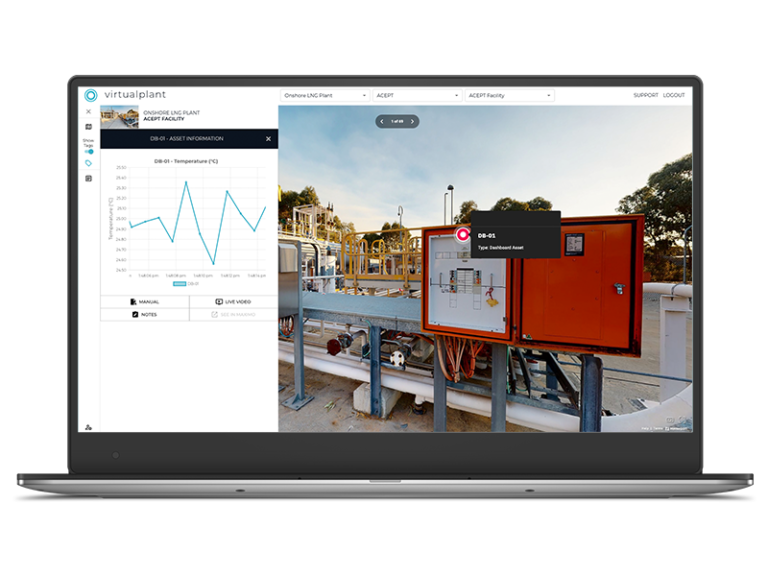
RemSense’s virtualplant platform delivers a high-resolution visual twin that links directly to asset registers and maintenance systems. Unlike traditional digital twins that rely on drawings, virtualplant lets you experience your site as it really is, enabling faster, more accurate decisions.
Ready to see virtualplant in action? Book your FREE demo today.